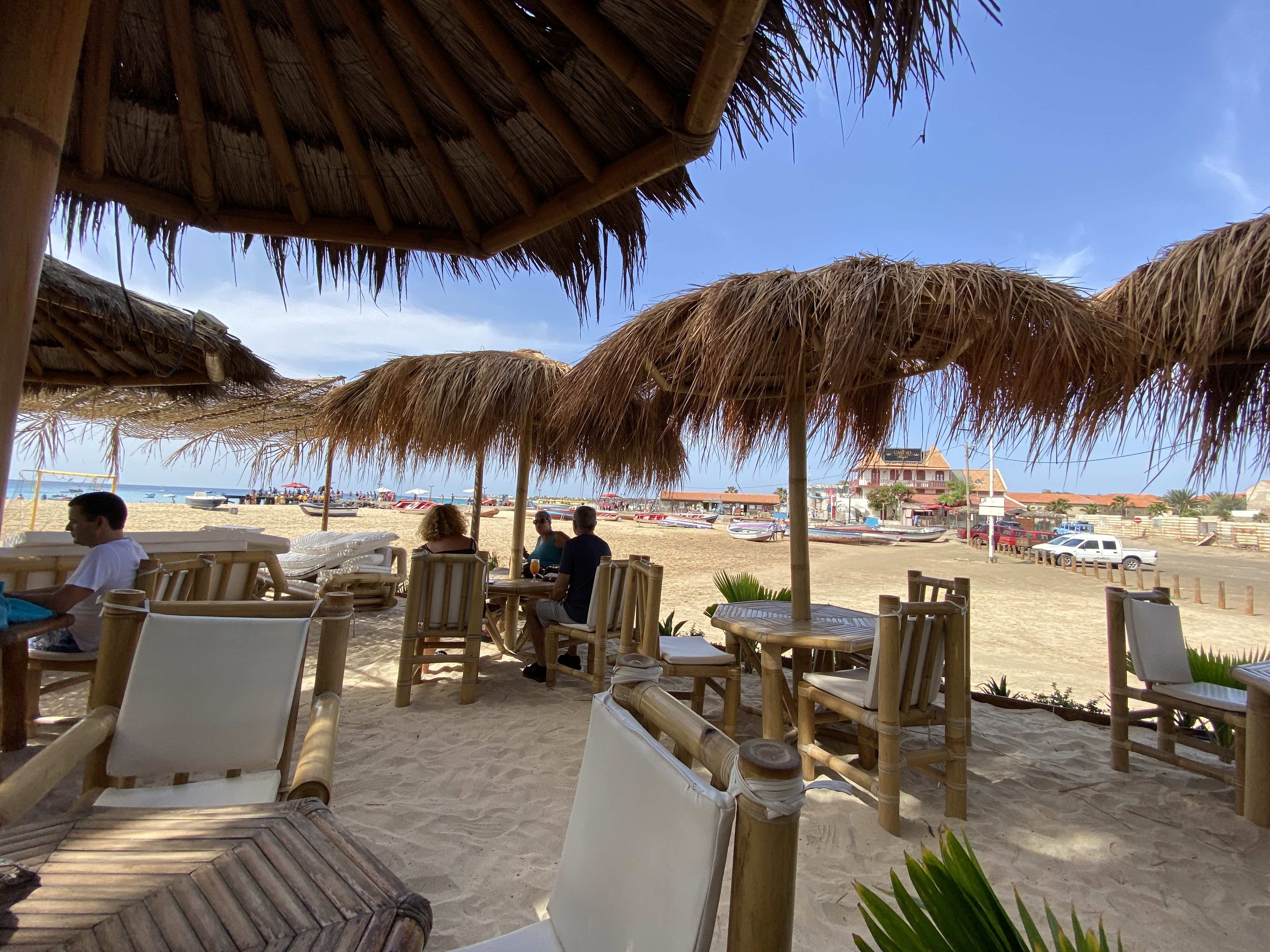
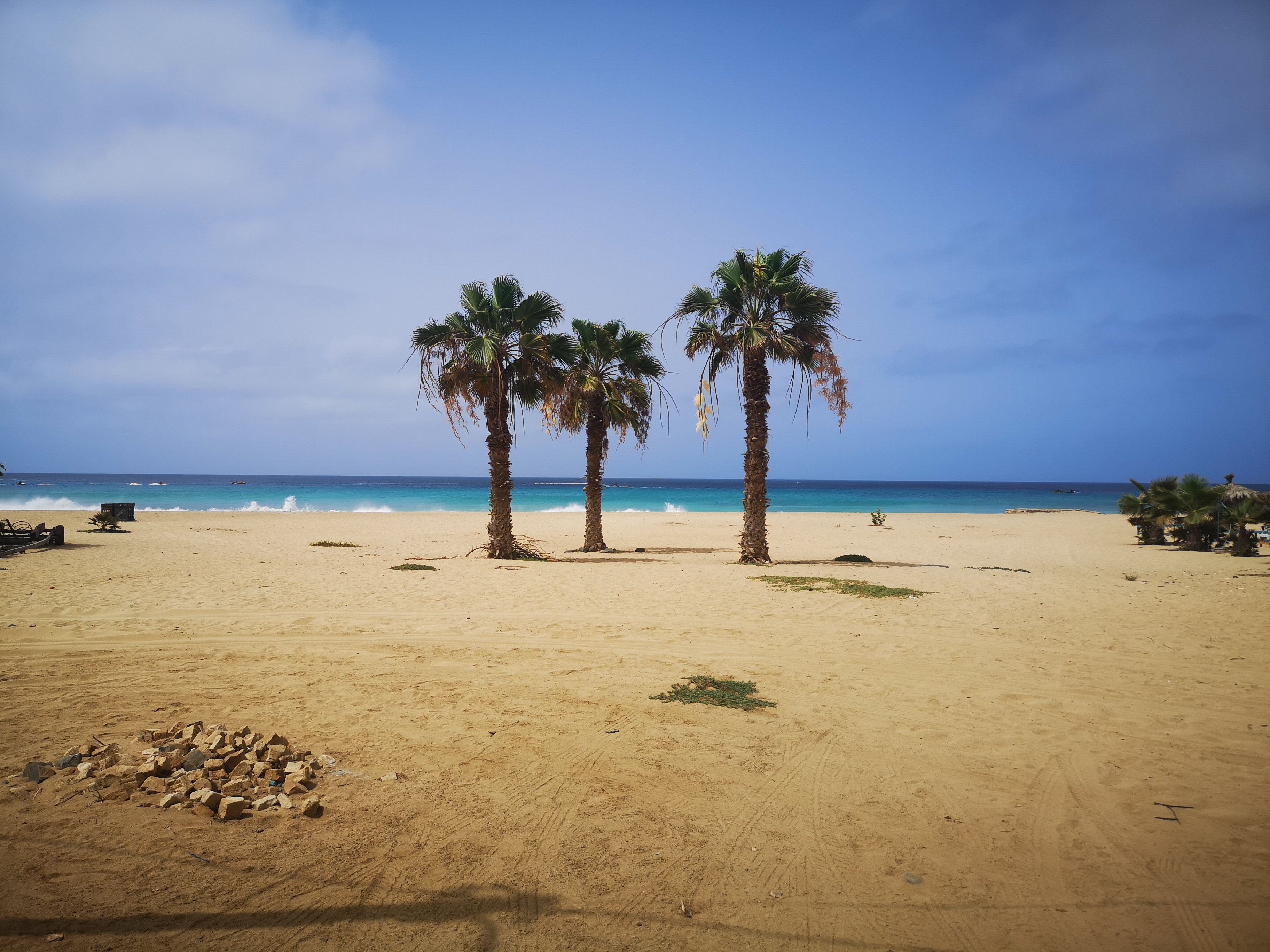
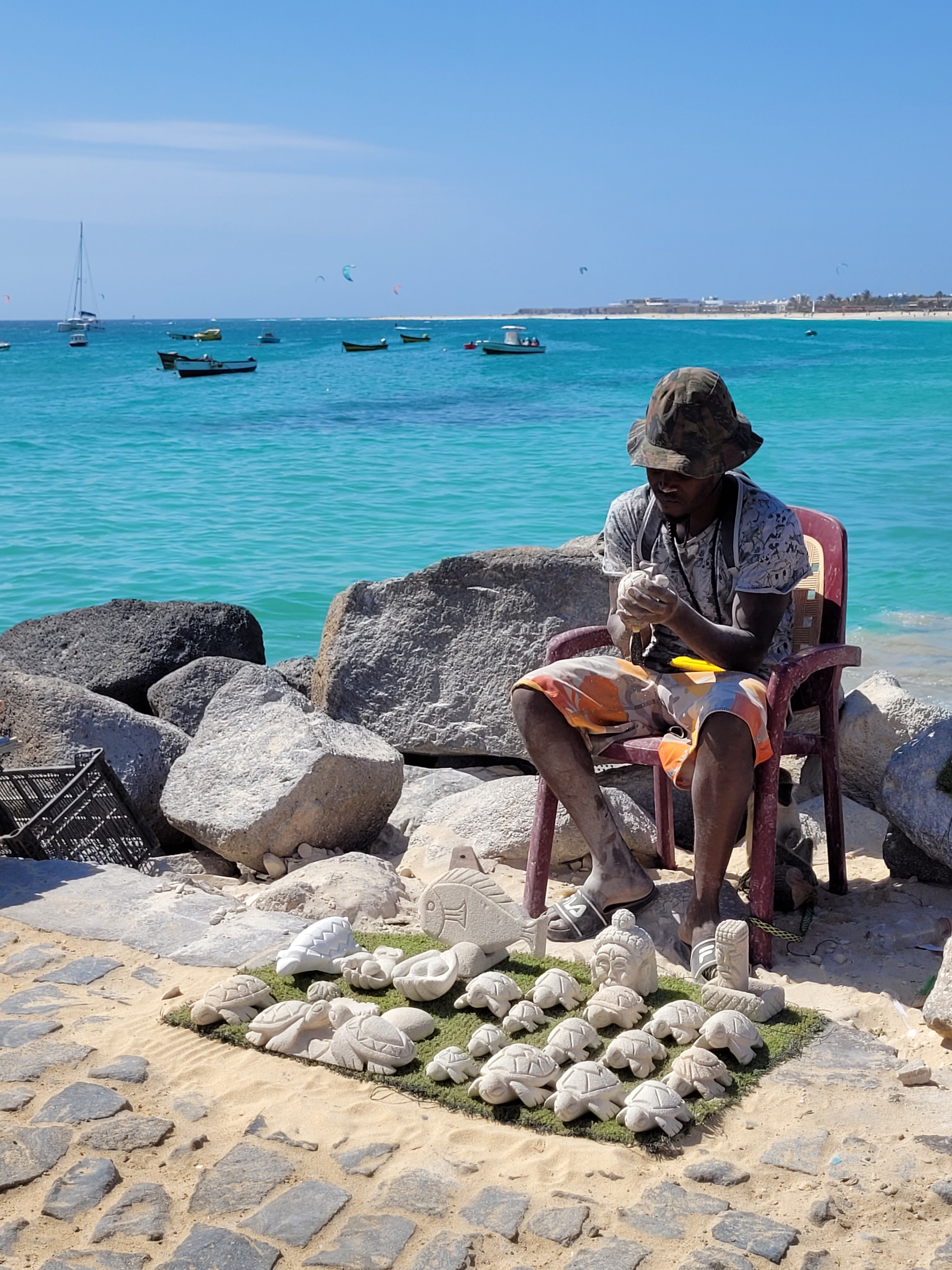
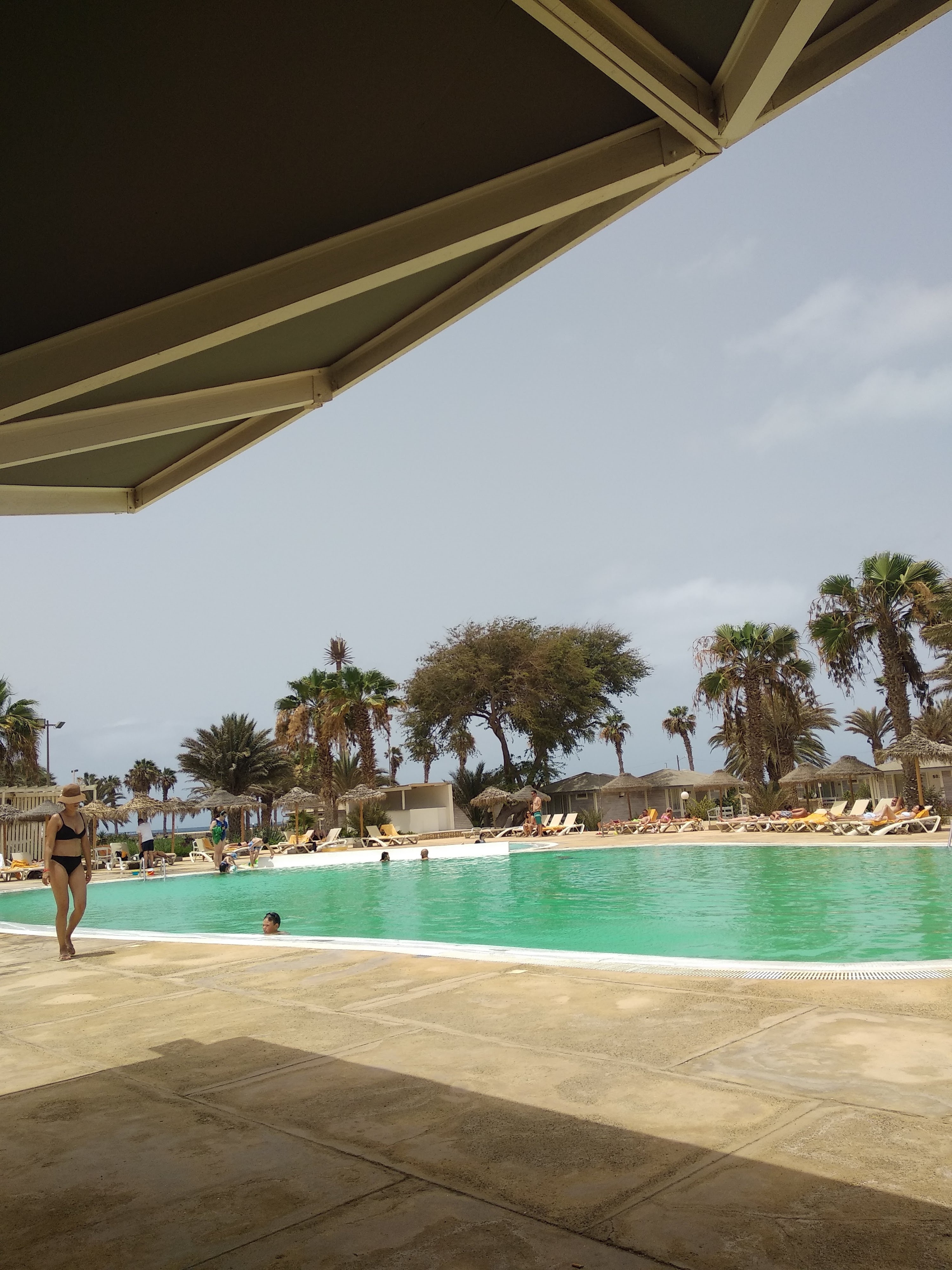
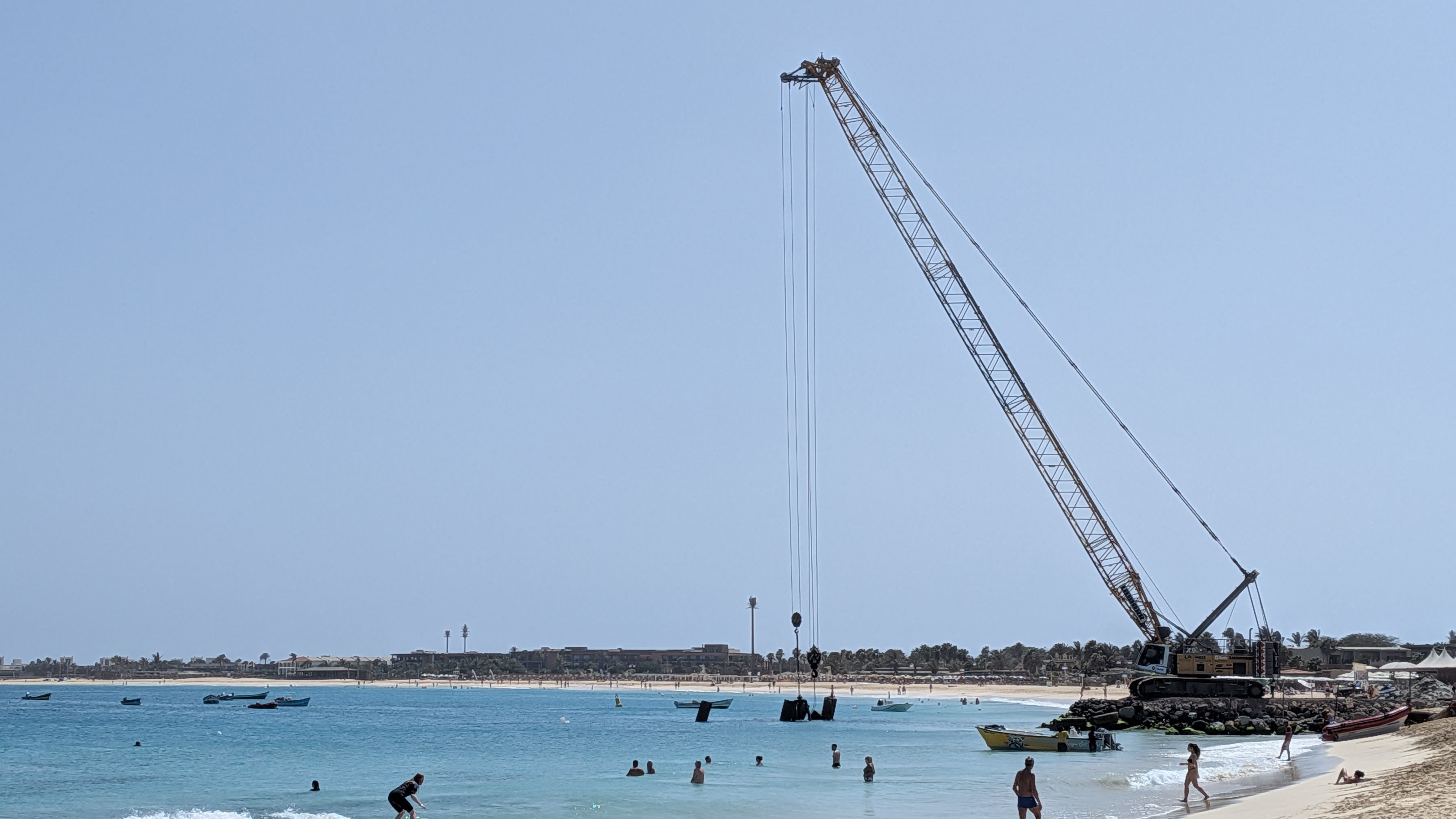
Storm swell damaged the structure
This is not only a photo spot: fishers land and sell the catch here, and visitors often start snorkelling and walks from the pier. With the damage, those routines have moved or paused.
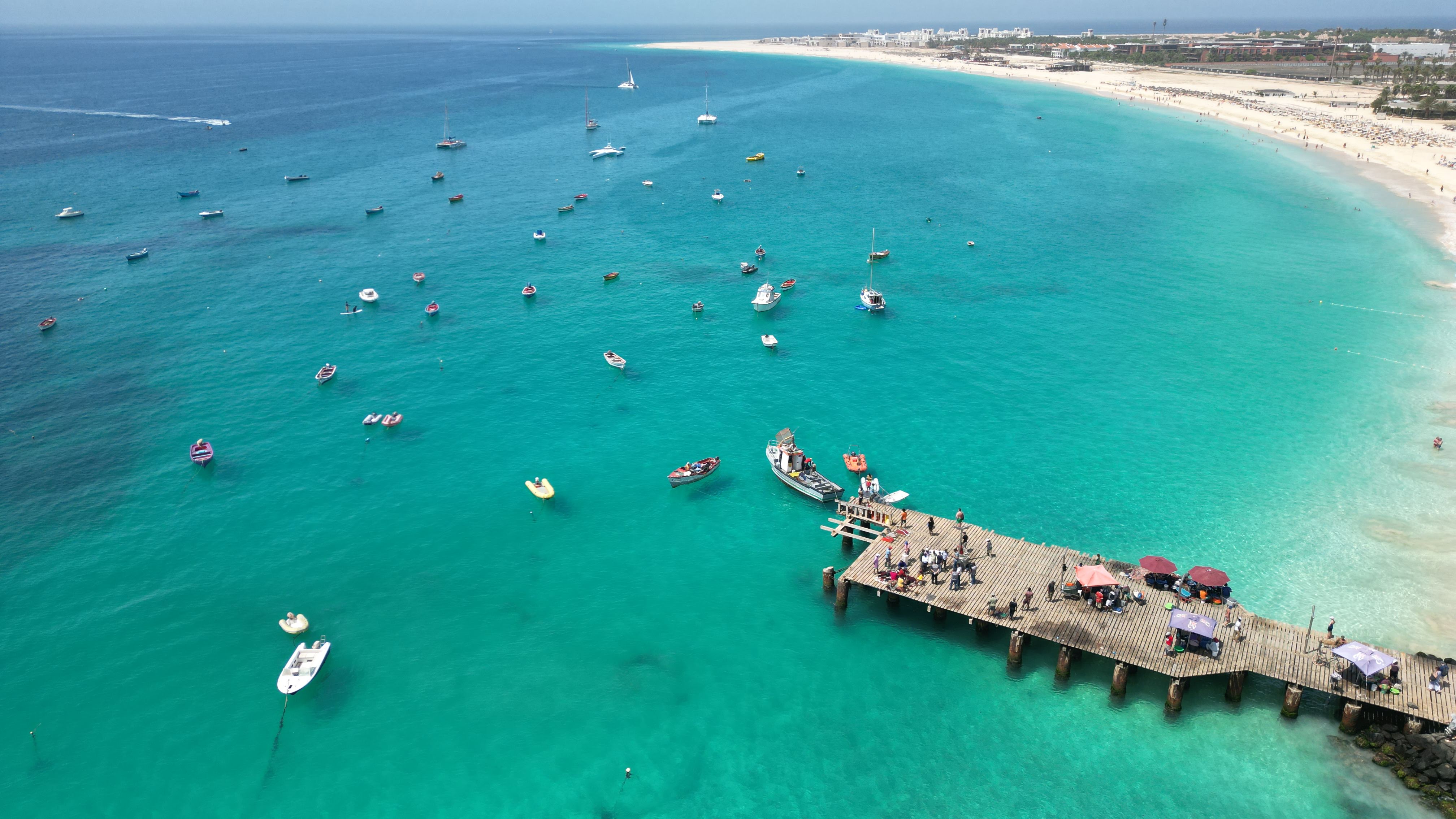
Der Pier von Santa Maria · ein Holzsteg, der vor der Südküste von Sal in den Atlantik ragt — Fischauktionen bei Tagesanbruch, festgemachte bunt bemalte Boote und das Tor zum weißen Sand der Praia de Santa Maria: das Herz der Fischerkultur von Cabo Verde.
Standort auf Google Maps ansehen"Temporarily closed" on Google Maps does not mean the whole beach is closed: the fenced-off area is the timber jetty itself (Pontão de Santa Maria). The beach and nearshore remain open.
To every traveller who reaches Sal
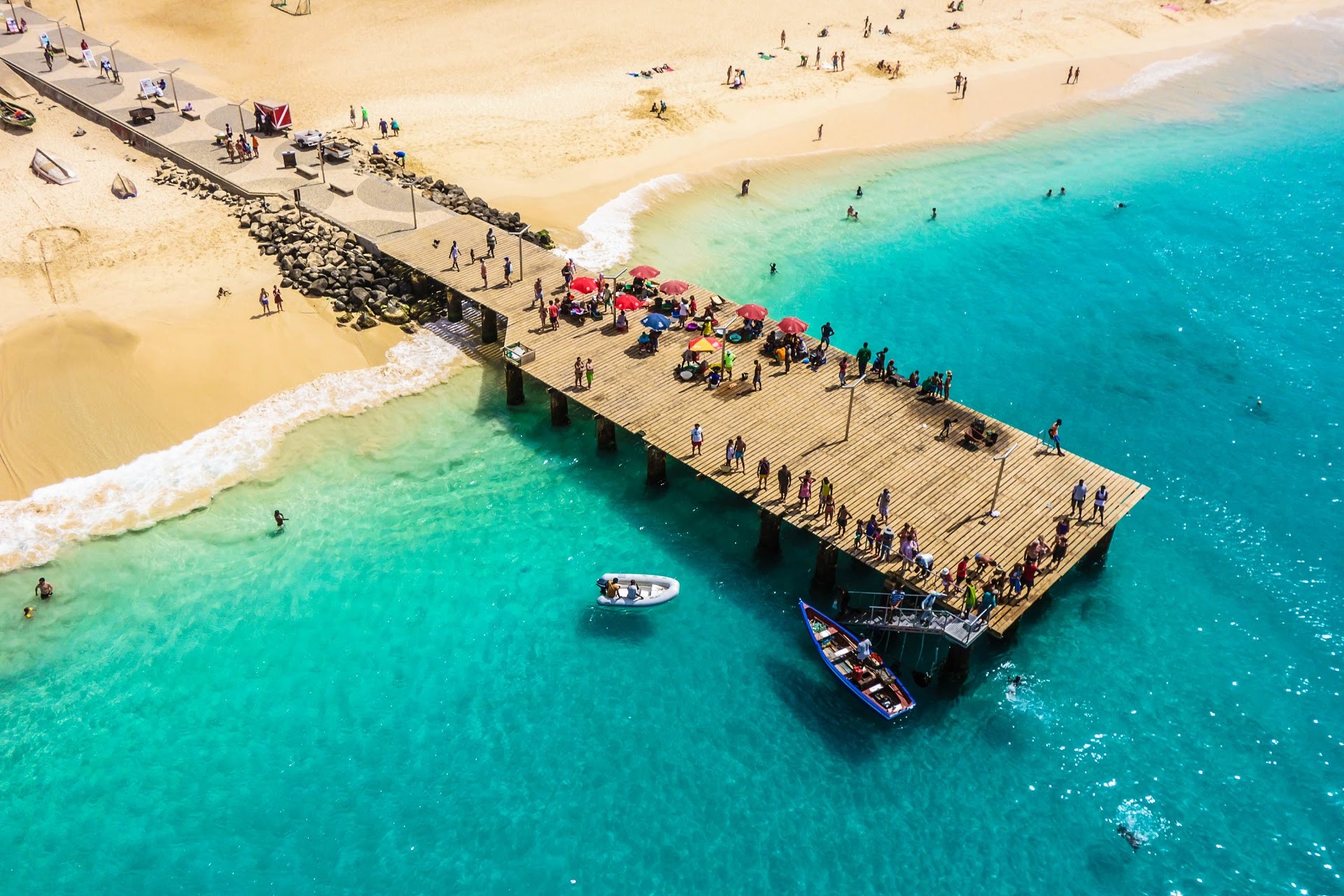
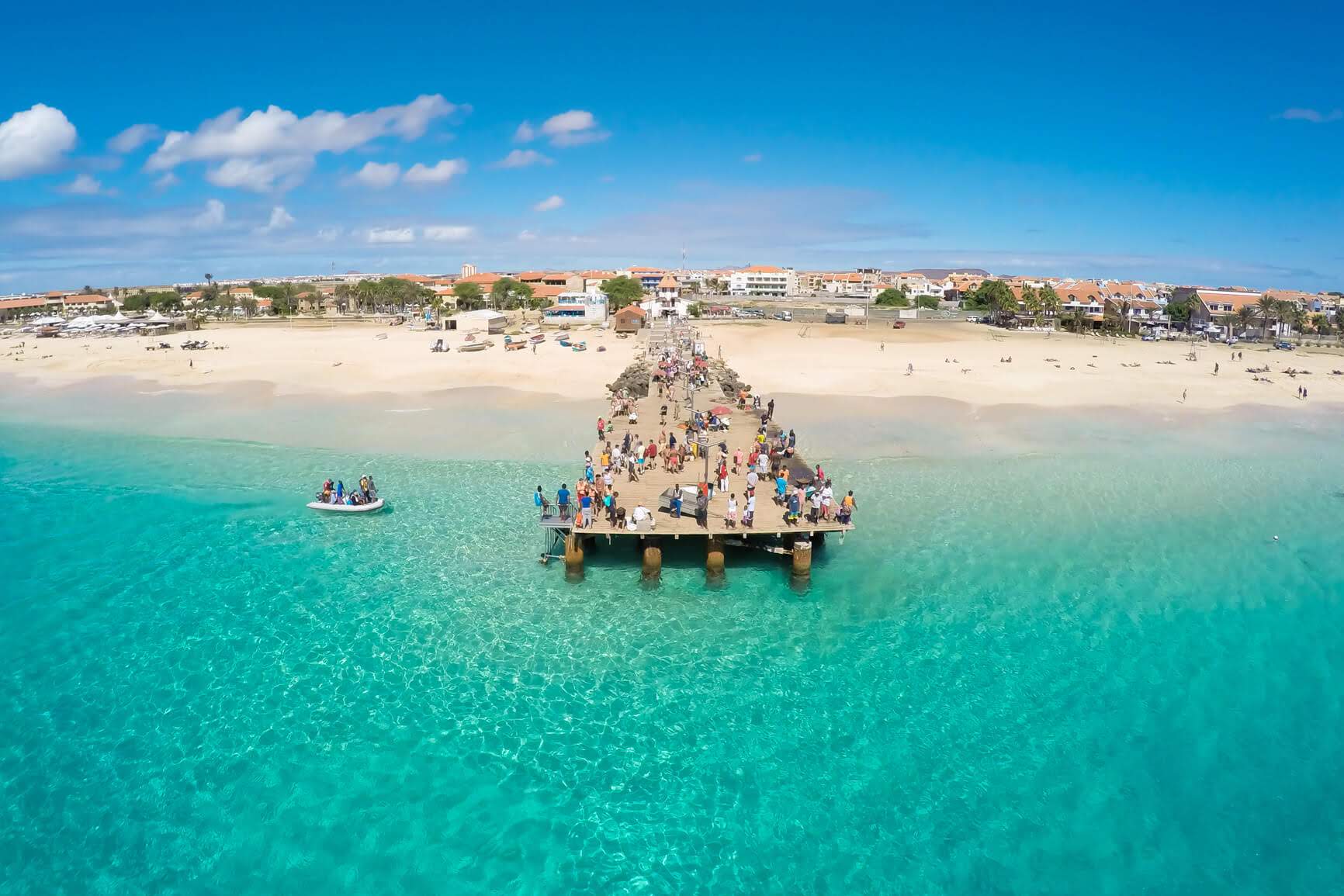
Welcome to the Pier of Santa Maria. Locals simply call it the "Pontão" — a timber jetty stretching from the white sand of Praia de Santa Maria into the Atlantic. It is neither a theme park nor a museum, but the liveliest pulse of Santa Maria town: every dawn the fishing boats come home and the pier fills with the shouts and bidding of the fish auction.
There are no tickets, no fences — only sea wind, the salt tang of nets and rows of painted boats rocking on the swell. Dawn is the pier's busiest hour, as the fishwives sort and call out their catch and tuna and dolphinfish glint on the planks; at dusk the jetty turns into the town's most romantic sunset stand.
As an independent editorial team, we built this site not only to tell you where the pier is, but to invite you to arrive as a witness rather than a mere bystander. When you stand on planks polished by countless fishing boots, you become both a witness to Santa Maria's age-old fishing lights and a co-keeper of its continuing coast.
Take a photo of the fishing lights. Leave the pier as you found it.
Let the Pontão keep glowing for Santa Maria, every single dawn.
Around five or six in the morning the boats unload at the jetty and the fishwives call, weigh and basket the catch by species and freshness. It is Santa Maria's rawest market and your front-row seat to Cape Verdean fishing.
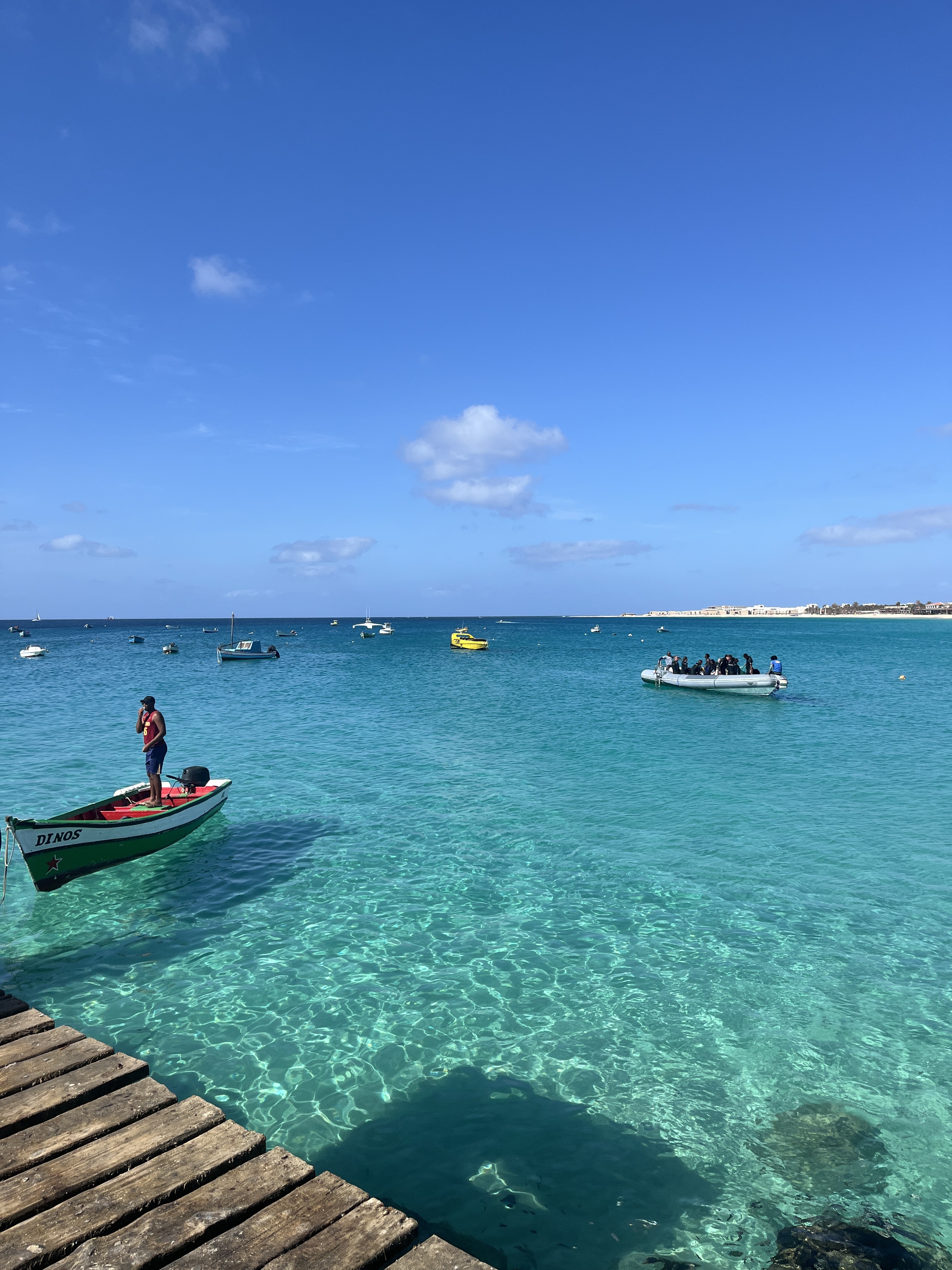
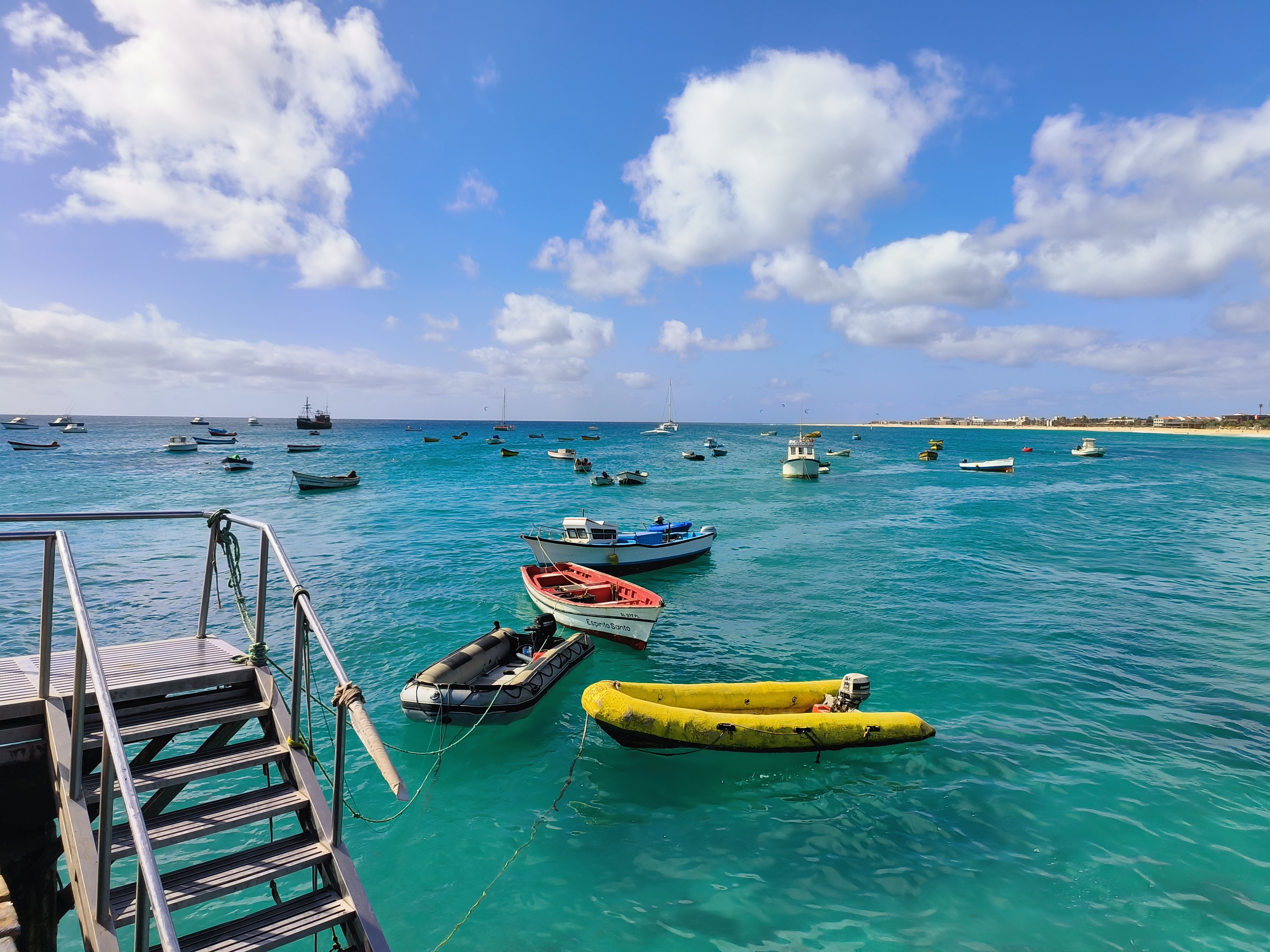
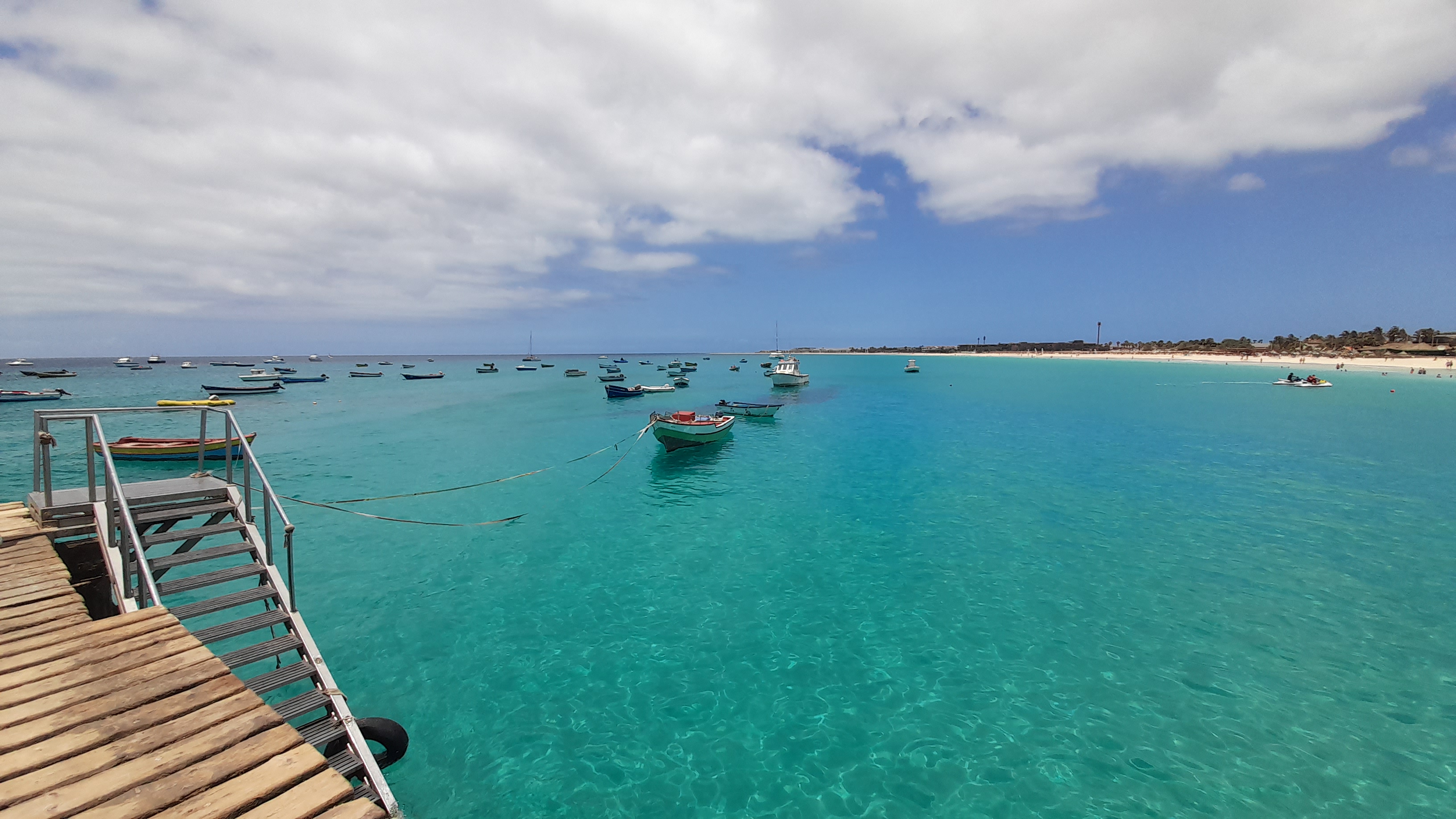
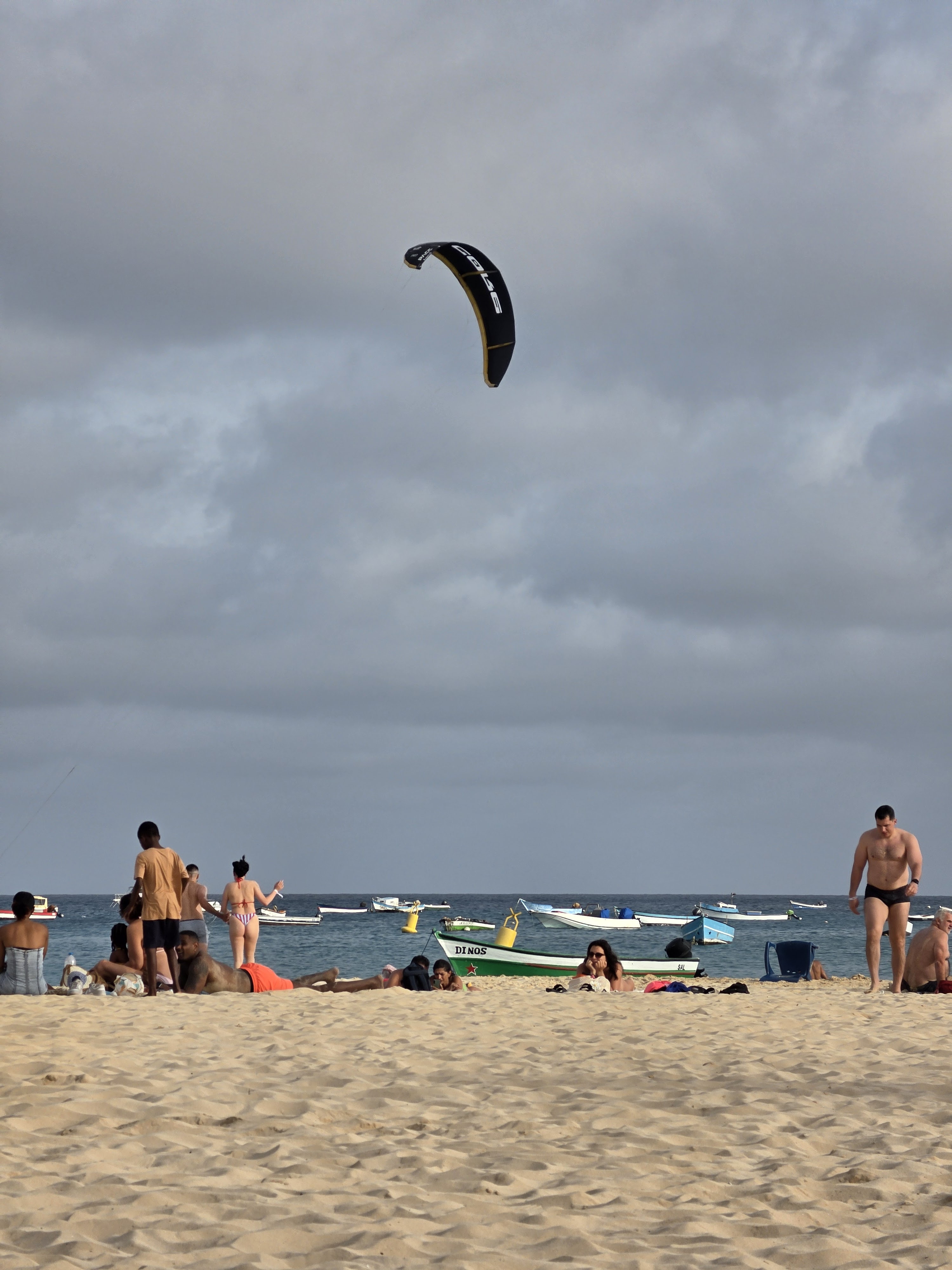
Handsome little boats with hand-lettered names and blue-green-yellow paint moor along both sides of the jetty. They sail by day and return at dusk — the plainest, most romantic tie between Sal's fishers and the sea.
At dusk the far end of the jetty faces the open west. The sun drops into the Atlantic and all of Praia de Santa Maria glows gold and red. Many visitors pair the morning auction with the evening sunset in a single trip.
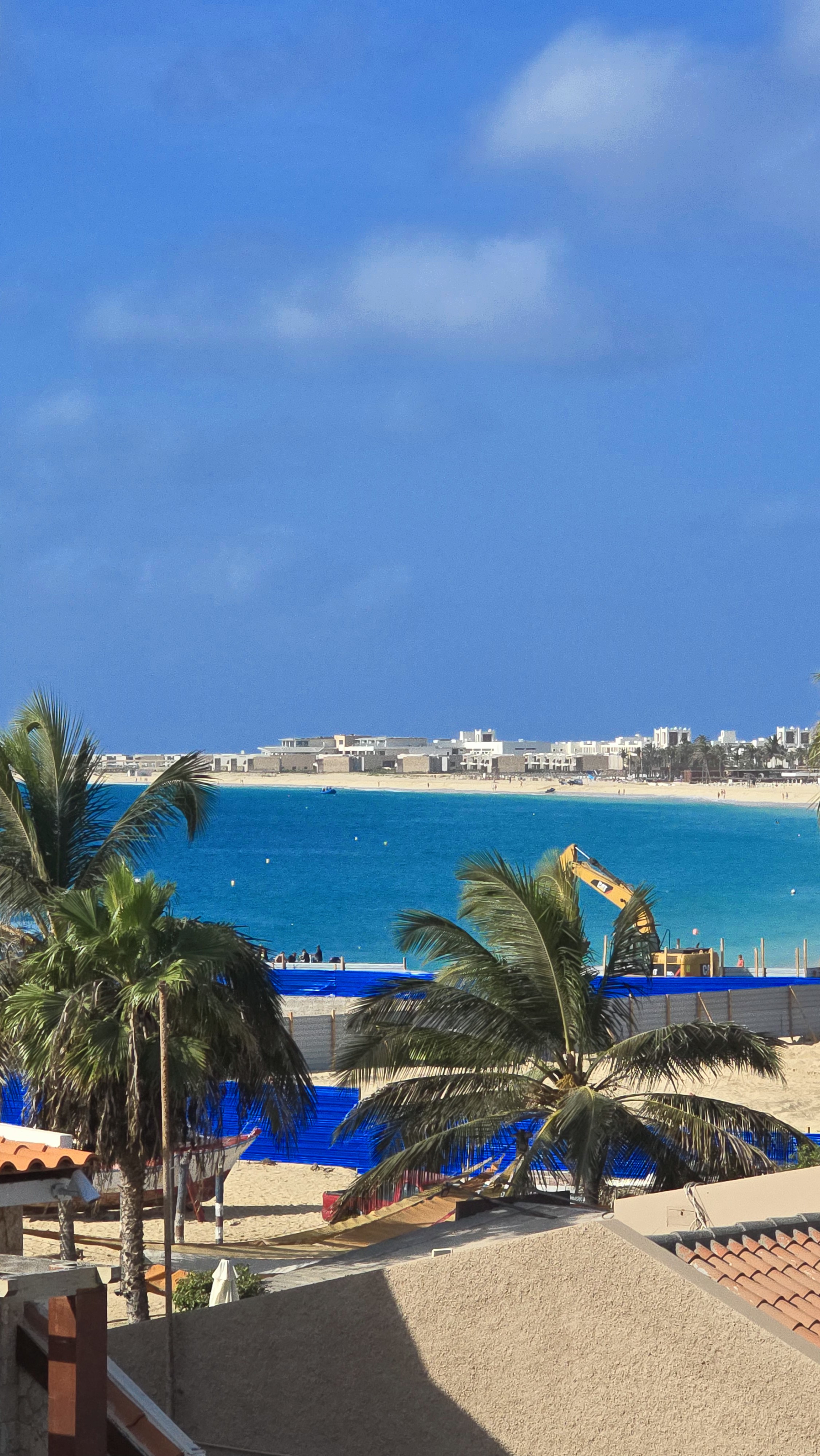
In Oct 2024, tropical-storm swell severely damaged the wooden structure. The pier is now fenced off for reconstruction, so Google Maps marks it as "temporarily closed". <strong>The beach itself remains open</strong>.
The beach and promenade are free and open; the pier area is fenced off and entry is prohibited.
The auction alone: ~30 min. Add a stroll, the boats, photos and a sunset and you can linger 1–2 h.
Sunset time and the angle of light shape what you see. Data is fetched live from public APIs to help you plan.
The pier sits at the north end of Praia de Santa Maria, in the heart of Santa Maria town. It is walkable from most hotels — there is no direct bus, so walk, rent a car or take a taxi.
Recommended · Santa Maria is flat and tidy, ideal on foot or by bike; the long white beach is right alongside, so you can stop for a swim anytime.
From a timber jetty reaching into the sea, to the bustling dawn fish auction, to the town's most romantic sunset stand — behind this pier lie a few key memories of Santa Maria's everyday life.
"Pontão" is Portuguese for a jetty or landing stage — a timber or stone platform reaching from the shore into the water. The Pier of Santa Maria stands at the north end of Praia de Santa Maria and has been the natural point where fishers sail out, land and trade for centuries.
It is not a tourist facility but an extension of the town's working life. That is exactly why the jetty's orientation and length decide whether boats can moor safely in the swell and whether the dawn catch comes ashore smoothly.
Every dawn the returning boats unload at the jetty and the fishwives (peixeiras) call, weigh and basket the catch by species, freshness and weight, then sell it off to restaurants and residents. It is a ritual of Santa Maria life handed down for generations.
The auction is more than trade — it is where information flows: which grounds are full of fish, which days the swell keeps boats in. Stand quietly and you can read half the ocean's pulse of Sal.
Sal's fishing boats are painted blue, green and yellow, with hand-lettered names and blessings on the hull. The colours make them easier to spot in the swell and carry each family's wish for a safe return.
These little boats sail the nearshore by day and come home at dusk, mooring along both sides of the jetty. They carry Cape Verde's philosophy of "the sea as a field" and are among Santa Maria's most photogenic sights.
Today the jetty is cared for by the local fishing community together with the town of Santa Maria; the auctions and mooring run in good order. Many of the fishwives and boat owners were born on the island and know the sea's moods best.
This community stewardship keeps fishing income local and makes your visit part of protecting the coast — respect the work, watch quietly, and leave the pier to those who truly live by the sea.
The ecology around the Santa Maria pier is a quiet portrait of coexistence between people and sea life. The gentle white sand and clear nearshore waters are not only a natural harbour for fishers, but also a lively zone for coastal species. Here, wildlife spotting often begins with the return of the fishing boats.
Fregata spp. · Larus spp.
As the first boats approach at dawn, these seabirds circle overhead. They often skim the sand and water while peixeiras (fishwives) handle the catch, picking up small scraps of fish and shrimp.
Dasyatidae spp.
In the shallows near the pier, you can often spot stingrays gliding close to the sandy bottom. They sometimes roam near the unloading area in search of food. Keep your distance and observe only.
Ocypode cursor
These small crabs, almost the same colour as the white sand, are most active at dawn and dusk. They sprint across the beach, clearing organic matter washed ashore — a key part of keeping the sand clean.
"The timber pier is fenced off so you can't walk out, but the trade moved to the sand beside it. At 6 a.m. the beach fish market is intense — tuna shining in the first light. This is Cape Verde at its most real."
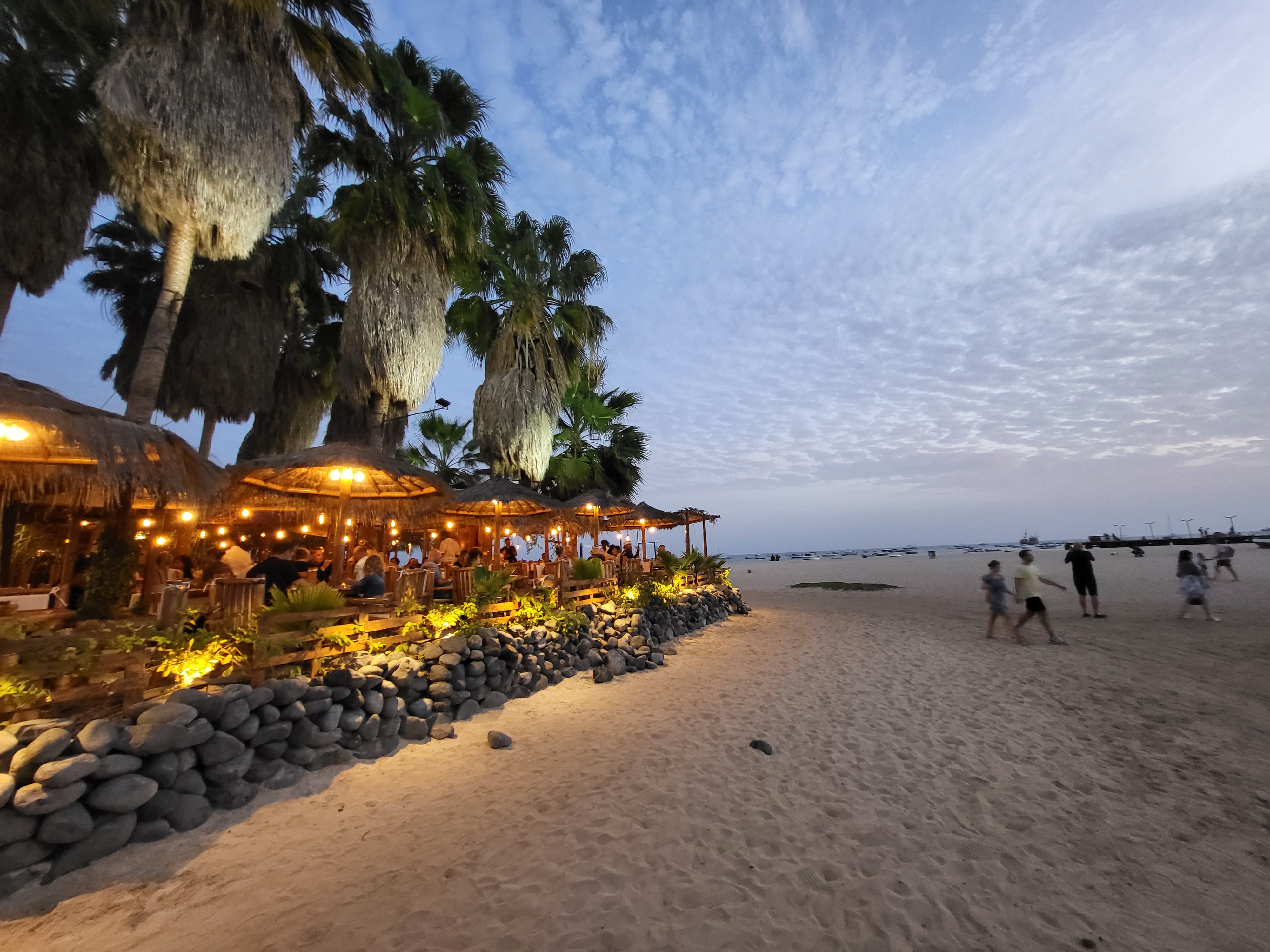
"Staying in town, we walked here every evening for the sunset. Painted boats rocking in the glow, Atlantic wind in your face — strangely healing."
"Come early. The peixeiras (fishwives) crossing the sand with baskets on their heads is pure drama. Just ask with a smile before taking close-up photos — respect their work."
"The fence says completion in 2027. I couldn't walk to the end of the long jetty this time, but I still saw stingrays gliding over the shallows — worth it."
Right beyond the jetty lies endless golden sand — kilometres of beach famous for windsurfing and kitesurfing. Most visitors base here and walk between the pier and the town.
The fish market and harbour right next to the pier — the hub where Santa Maria's daily catch is landed. Liveliest at dawn, when the fishwives sort, call and weigh the catch.
The headland at the south end of Santa Maria town, an easy walk away. The best spot for the Atlantic sunset and a view back to the pier's lights; locals often sit here at dusk.
Santa Maria's beach and pier are not only scenery — they are also a working "sea farm" that supports local livelihoods. Please read and commit to the guidelines below so the shore can remain clean and alive.
The pier is currently fenced off for reconstruction. For your safety and to support the works, do not climb, damage, or cross barriers.
The fish market is a workplace, not a show. Before taking close-up photos of peixeiras (fishwives) or fishers at work, ask with eye contact or a smile.
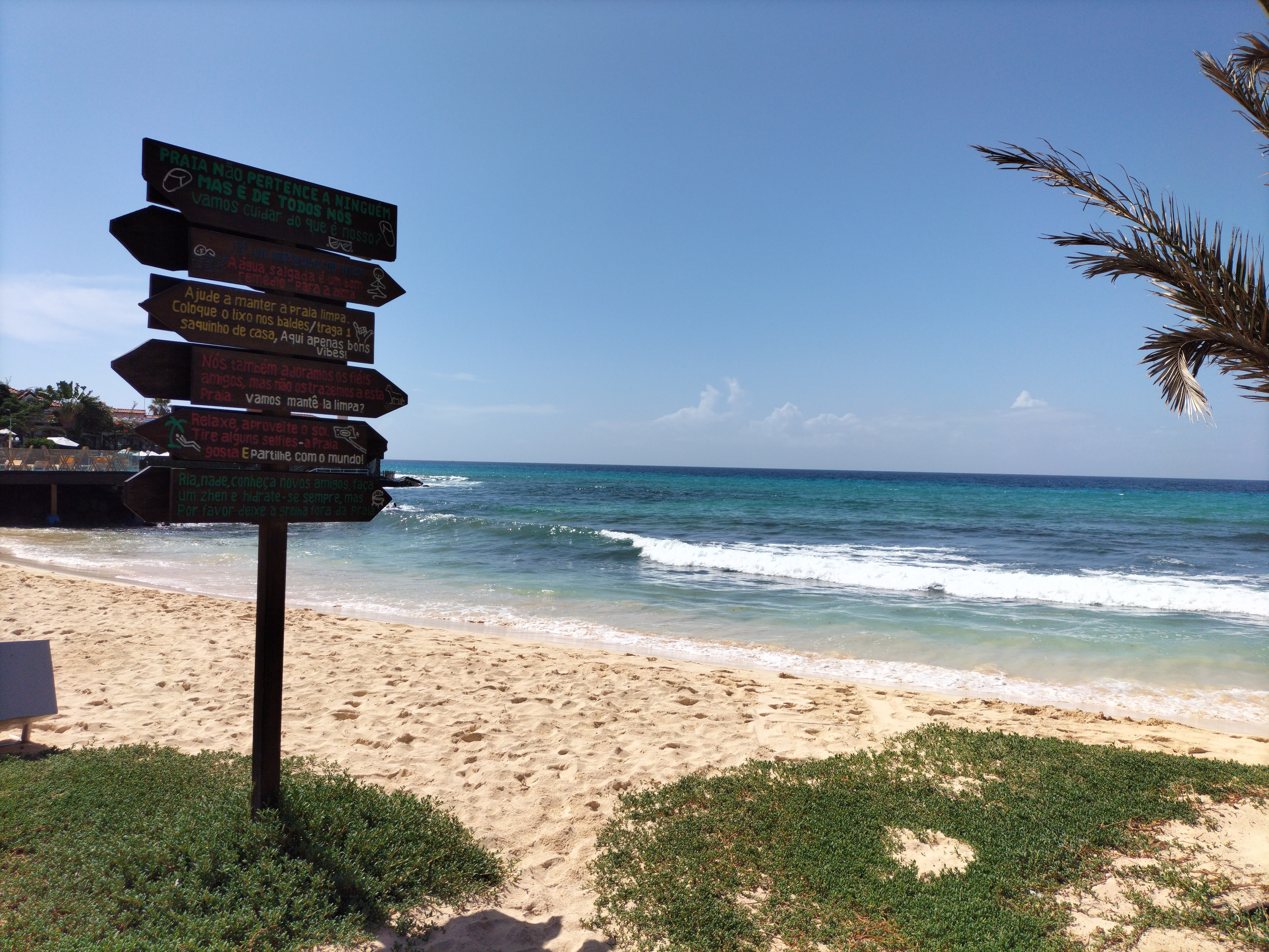
The beach is windy — secure your rubbish, especially plastic bags and bottles. Once in the sea, plastic can be fatal to stingrays and sea turtles.
During dawn unloading, vehicles and workers move across the sand. Watch from the side and keep the working path clear.
Take a photo of the fishing lights. Leave the town as you found it.
Let the pier keep glowing for Santa Maria, every single dawn.
Die folgenden Informationen wurden von einem unabhängigen Redaktionsteam auf Basis von Vor-Ort-Beobachtungen zusammengestellt und dienen nur der Orientierung. Bitte prüfen Sie die aktuellen Regelungen und Bauhinweise über offizielle Kanäle von Cabo Verde, bevor Sie reisen.
Völlig kostenlos. Sowohl die Praia de Santa Maria als auch das Fischmarktgelände sind öffentliche Räume — es ist kein Ticket nötig.
Ja. Auch wenn man die hölzerne Pier nicht betreten kann, wurden Entladung und Handel vorübergehend an den Sand am Fuß der Pier und in nahegelegene Schattenstrukturen verlegt. Die morgendliche Auktion findet meist weiterhin statt.
Für Kultur: 06:00–08:30, wenn die Boote zurückkehren und der Fischhandel seinen Höhepunkt erreicht.
Für Landschaft: nach 17:30, für einen entspannten Strandspaziergang und den Atlantik-Sonnenuntergang über den bemalten Booten.
Die Pier liegt im Zentrum der Stadt Santa Maria und ist von den meisten Hotels und Pensionen in 5–15 Minuten zu Fuß erreichbar. An der Avenida da Praia finden Sie Restaurants, Cafés und Surfclubs für einen entspannten Stopp danach.